
HMI & Touchscreen Repair: When to Repair vs Replace an Operator Panel
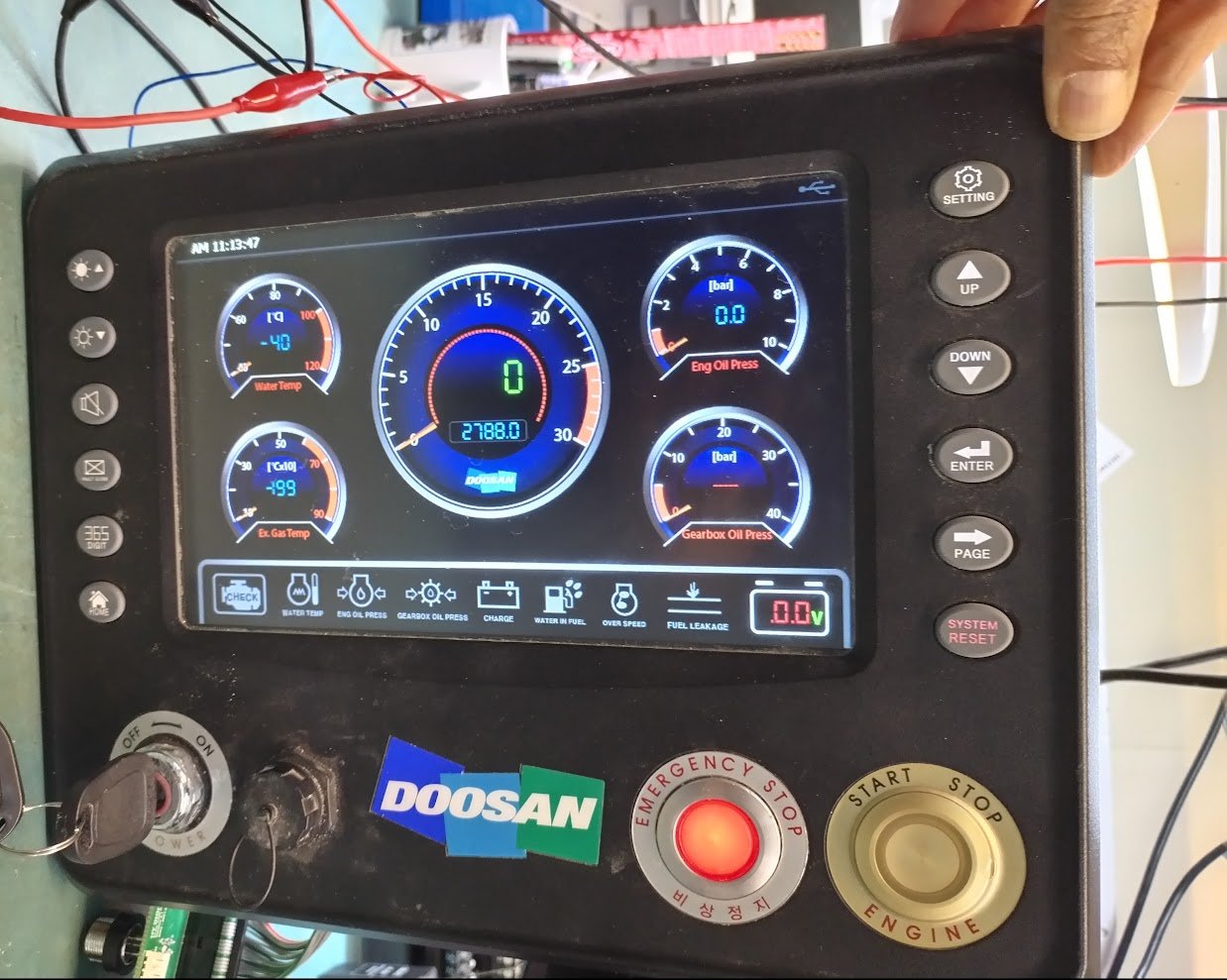
HMI & Touchscreen Repair: When to Repair vs Replace an Operator Panel
An operator panel goes dark, or the touchscreen stops responding, and a production line stops with it. The instinct is to order a replacement straight away. That's often the wrong call — and sometimes it's the only option. Here's how to tell the difference before you spend money either way.
What You're Actually Deciding Between
Two outcomes, two very different cost and time profiles:
- Repair — the existing HMI is diagnosed at component level, the faulty part replaced, and the unit returned with your original software, settings, and screen graphics intact.
- Replace — a new or refurbished unit is sourced, which in most cases also means reprogramming, rewriting screen graphics, and sometimes modifying the machine's control system to accept a different product.
That second point is the one people underestimate. Replacing an HMI is rarely a straight swap. If you want the full breakdown of what fails on an HMI and how each fault is diagnosed, that's covered in detail on our HMI & Touchscreen Repair page.
The Cost and Lead Time Argument for Repair
Component-level HMI repair — as opposed to replacing the whole unit — typically costs 20–40% of a new equivalent, where a new equivalent even exists. On top of the unit cost, replacement usually carries hidden costs repair doesn't:
- Reprogramming and rewriting screen graphics from scratch
- Possible control system modification to accept a different HMI model
- Lead time on new hardware, which for industrial HMIs can run to weeks
- Risk of losing machine-specific settings that were never formally documented
Repair preserves what's already on the unit. If the fault is hardware-related and the memory or storage wasn't damaged, your programme and parameters come back with it. This matters most on production line HMIs — CNC controllers, packaging line panels, transfer line interfaces — where the screen graphics and machine-specific configuration took real time to build in the first place. See our electronics repair for manufacturing plants for the full picture of what we cover on the production floor.
We cover the diagnostic approach itself — testing down to component level rather than swapping boards — in more detail here: What Is Component-Level PCB Repair?
When Replacement Genuinely Makes More Sense
Repair isn't always the right call, and you should be told that plainly rather than sold a repair that doesn't stack up. Replacement is usually the better option when:
- The screen is physically cracked and the damage has spread into the control boards behind it
- A direct replacement is cheap, in stock, and requires no reprogramming
- The unit has failed repeatedly despite previous repair — a sign of a deeper wiring or environmental issue, not a component fault
Any competent repair assessment should tell you this before work starts, not after you've paid for diagnosis.
When Repair Is Nearly Always the Right Call — Obsolete Panels
This is where the maths changes completely. A large number of HMIs still in service were manufactured in the 1990s and 2000s, and the OEM stopped supporting them years ago. When one of these fails, there is no new replacement at any price. The real choice isn't repair vs replace — it's repair vs replacing the entire machine control system.
We repair obsolete and discontinued HMIs other companies turn away, using board-level diagnostics to work without original schematics where needed. This is the same principle behind keeping any legacy industrial equipment running — we've written about the wider issue here: Obsolete Industrial Electronic Repair: How to Keep Legacy Equipment Running
Three Things to Check Before You Decide
- Will your settings survive? If the fault is hardware-related, software and machine parameters are usually retained through repair. Ask before you send the unit.
- What does the warranty cover? A written warranty (6–24 months is standard) should be confirmed before work starts, not assumed afterwards.
- Do you need a paper trail? A repair report documenting the fault found and work carried out matters if you're running ISO 9001 maintenance records — replacement doesn't give you that.
For the broader financial case on repair vs replacement across industrial electronics generally, see: 5 Ways Industrial Electronic Repair Slashes Your Manufacturing Maintenance Budget
Quick Reference
| Situation | Usually the right call |
|---|---|
| Backlight failure, flickering, unresponsive touch | Repair |
| Obsolete panel, OEM support ended | Repair |
| Communication fault with control system | Repair |
| Cracked screen with no internal damage | Repair (screen swap) |
| Cracked screen with internal board damage | Assess — may tip to replace |
| Repeated failure after previous repair | Investigate root cause first |
| Cheap in-stock replacement, no reprogramming needed | Replace |
Frequently Asked Questions
Is it always cheaper to repair an HMI than replace it?
Not always, but usually — particularly once you factor in reprogramming and screen graphics that a straight replacement doesn't include. The exception is when a direct, in-stock replacement exists and needs no reconfiguration.
Will I lose my HMI programme and settings if it's repaired?
In most cases, no. Where the fault is hardware-related and memory or storage is undamaged, settings and programmes are retained. We advise customers to keep a backup of programme files where possible, and will flag it in advance if there's any risk.
What if the manufacturer of my HMI no longer exists or has discontinued the model?
That's one of the more common reasons customers come to us. Obsolete HMI repair is a specialism — component-level diagnosis doesn't require OEM support or original schematics to work.
Screen down and not sure which way to go? Tell us the make, model, and fault — we'll assess it honestly and tell you if repair doesn't make sense, not just when it does.
Request a Free Assessment View All Repair Services